Introduction
If you’re a CEO or executive leader, you’ve probably been told that “culture eats strategy for breakfast.” It’s on coffee mugs, keynote slides, and HR decks. But here’s the uncomfortable truth:
Most organisations are still treating culture like a branding exercise.
They roll out values, launch comms campaigns, run a few engagement surveys—and then wonder why nothing really shifts. Performance stays patchy. Accountability slides. Silos deepen. The vibe in the business feels… stuck.
So let’s set the record straight:
Culture is not your values. Culture is not your offsite themes. Culture is not what you say—it’s what you reward, tolerate, and repeat.
And if you want to improve performance through your people, you have to start seeing culture for what it actually is: The invisible system that drives how your business works—especially when no one’s watching.
So what should you do instead?
If you are leading a large (or small) organisation and are serious about lifting performance through people, don’t start with values, posters, or engagement surveys.
Here’s what you should do:
1. Start with performance, not “culture.”
Don’t make culture the goal. Make performance the goal—and ask:
- Where are we leaking energy?
- Where is potential going unrealised?
- Where are our systems working against our strategy?
Only then ask:
What cultural conditions are helping—or hurting—our ability to execute?
2. Diagnose the real experience—not the slogans
Forget what’s laminated to the wall. Use tools like the OCI-OEI to uncover how people actually experience working in your business. Measure the norms, behaviours, and underlying systems that drive them. Knowing where you really are is imperative to starting at the right place.
Engagement surveys will tell you how people feel. Culture diagnostics will tell you why they feel that way:
There's a Big difference.
3. Start with your leaders (yes, including you)
Culture change that doesn’t touch leadership behaviour is just theatre. If your executive team isn’t actively examining their own style, decision-making, and impact—you’re not changing culture. You’re just hoping for trickle-down transformation.
Start by holding up the mirror. Do the 360. Run the leadership diagnostic. Model the change you want others to take seriously.
4. Align your systems with your intent—and empower the right people to act
If you say you want collaboration but reward individual heroics—you won’t get collaboration. If you say psychological safety matters but leaders still hoard power and people need five sign-offs to take a risk—you won’t get initiative.
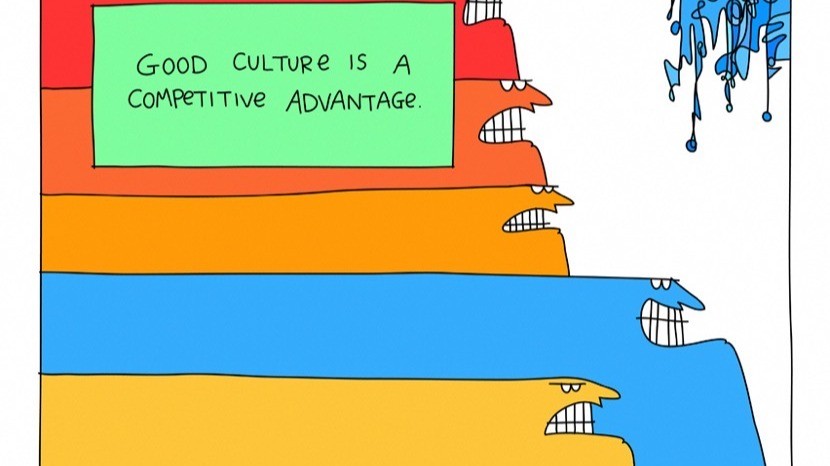
Culture eats systems for breakfast—and then spits out good intentions for lunch.
To create real change, you need to align:
- Who gets hired, promoted, and recognised
- How decisions are made and who’s allowed to make them
- How failure is handled—and whether learning is safe
- How easy it is to get things done without permission loops
And crucially: Empower people at the right levels of the organisation to make shift happen. That means giving team leaders, functional heads, and middle managers not just accountability—but the authority and support to change how work happens in their world.
You can’t shift culture from the centre. You create the conditions—and then let the system breathe.
5. Don’t fix the whole culture—shift key conditions
You don’t need a 5-year “Culture 2030” roadmap with 14 pillars and a brand anthem. You need a few sharp interventions in high-leverage spaces.
That might mean:
- Translating the Mission & Vision of the organisation into something meaningful for every team member
- Running leadership sprints on constructive feedback
- Redesigning key decision-making processes
- Building coaching habits in mid-level leaders
- Empowering people with the requisite Resources, Skills & Experience, Authority and the Opportunity to act
Culture shifts when people start behaving differently — and feel the system enables it, not constrains it.
What you wouldn’t do
- Don’t launch a values refresh (probably ever). Diagnose the gap between espoused beliefs on how things should be done and experienced reality. Then plug the gap with organisationally determined Operating Principles, built by the people, for the people, so that individuals with diverse personal values have a roadmap.
- Don’t delegate culture to Comms or HR without senior leadership ownership
- Don’t use engagement data as your compass—it’s a lag indicator, not a lever
- Don’t assume alignment means sameness—great cultures allow constructive friction, not conformity
And does size matter?
Not as much as you think. In a small org, culture is direct—you can feel the founder’s breath on every interaction. In a large org, it’s systemic—what gets funded, rewarded, prioritised.
But in both? Culture is the environment that either accelerates or corrodes performance. And if you don’t lead it deliberately, it’ll still happen—it just won’t be the one you want.
Final Word:
Culture is not the soft stuff. It’s the hardest stuff—because it lives in the tension between behaviour, belief, and business reality.
So stop polishing the poster and start pulling the levers.
If you know someone who could use this advice please feel free to forward to them. In fact post it and make it your own – all good with me. ;o)